Search This Blog

Thursday, February 13, 2014

PENGUIN BOOKS INDIA – STATEMENT ON THE HINDUS BY WENDY DONIGER - just got this in my mail


PENGUIN BOOKS INDIA – STATEMENT ON THE HINDUS BY WENDY DONIGER
Penguin Books India believes, and has always believed, in every individual’s right to freedom of thought and expression, a right explicitly codified in the Indian Constitution. This commitment informs Penguin’s approach to publishing in every territory of the world, and we have never been shy about testing that commitment in court when appropriate. At the same time, a publishing company has the same obligation as any other organisation to respect the laws of the land in which it operates, however intolerant and restrictive those laws may be. We also have a moral responsibility to protect our employees against threats and harassment where we can. 
The settlement reached this week brings to a close a four year legal process in which Penguin has defended the publication of the Indian edition of The Hindus by Wendy Doniger. We have published, in succession, hardcover, paperback and e-book editions of the title. International editions of the book remain available physically and digitally to Indian readers who still wish to purchase it. 
We stand by our original decision to publish The Hindus, just as we stand by the decision to publish other books that we know may cause offence to some segments of our readership. We believe, however, that the Indian Penal Code, and in particular section 295A of that code, will make it increasingly difficult for any Indian publisher to uphold international standards of free expression without deliberately placing itself outside the law. 
This is, we believe, an issue of great significance not just for the protection of creative freedoms in India but also for the defence of fundamental human rights

Saturday, June 29, 2013

Outsourcing mummydom


While Shah Rukh Khan and Gauri's decision to have a third child will invariably boost surrogacy among Indian couples, it will, hopefully, also draw attention to the need for stricter legislation to prevent the exploitation of poor women in the rent-a-womb industry 


Our enduring interest in Shah Rukh Khan has to do with the idea that he is Every Indian Man: he’s been married to the same woman for decades, is passionate about cricket, is borderline religious, is obsessed with his children, and isn’t averse to swearing when he loses his temper. So when he and his wife, Gauri, decide to have a third biological child through a surrogate mother, it inevitably attracts attention. BMC health department troopers stormed his Bandra home after NGOs condemned him for engineering the creation of a male foetus – an unfounded rumour it turns out; obscure religious bodies issued fatwas and fertility clinics reported a spike in calls asking about the procedure. All jolly good.

Surrogacy is a miraculous way for those who cannot conceive to have a biological child. Widespread poverty, the near non-existent surrogacy laws (The Assisted Reproductive Technology (2010) Bill that aims to regulate the fertility industry has not yet been approved by parliament), high success rates achieved by implanting surrogate mothers with as many as five embryos at a time, and the relatively low costs of the procedure here compared to the West (where it could cost about $50,000) has made India the Mecca of the infertile medical tourist. Reports suggest the Indian rent-a-womb industry is now worth more than Rs 25,000 crore.

What of Indian couples who are infertile? The WHO estimates the overall prevalence of primary infertility in India is between 3.9 and 16.8 percent. Within our (selectively) pronatal culture, infertile couples have to deal with feelings of social inadequacy and deep unhappiness. Indeed, if the procedure was cheaper, more economically disadvantaged couples, both rural and urban, might opt for it.

Given all this, the sight of two individuals in early middle age who have ‘had their quota’ opting for another baby without the attendant discomfort of actually going through the pregnancy themselves seems to reduce the seriousness of the whole process of procreation to that of a fashion choice. Still, this could be the beginning of a trend. It's quite likely that every other sufficiently moneyed Indian couple - you don't have to earn like SRK to afford a surrogate, though you should definitely make your millions by the time the newest addition gets to college - will now seek to banish their midlife crisis by opting for yet another baby, neatly outsourced this time. Procreation is addictive and the success of the national family planning programme has meant that fewer people (except for desperately poor families where working children are contributing members) have more than two children. In such a scenario, baby hunger often does strike around the time the younger child enters middle school. Until now, most of us dealt with it by adopting a pet or enrolling for, say, pottery lessons. Then, along come Shahrukh and Gauri to show us we can relive the magic of the early days. Bye, bye, rediscovery of the 40+ self. Hello, era of soiled nappies... Act 2.

And what about the surrogate mother? In SRK’s case, reports suggest she is a close relative and therefore, not someone who is in it for monetary reasons. But this is unusual. Most Indian surrogate mothers rent out their wombs often at risk to themselves for as little as Rs 4 lakh because they want to ensure a better future for their own kids. Let’s be honest: Indian society is extremely unequal and commercial surrogacy -- legal in India since 2002 – is a new, quite ghastly way of exploiting the bodies of poor women.

“There are so many women who don’t want to see their own child dying... out of ... bad health, or not getting educated, not getting two meals a day. So that’s why so many women are available,” said Ranjana Kumari of the Centre for Social Research on the American channel CBS News in April this year. 

Ranjana Kumari is right. In the absence of strict legislation, all sorts of complications and attendant ethical dilemmas look set to emerge: What of abusive families that might force a woman to repeatedly offer her womb for hire? What about the Home Ministry circular that seeks to prevent non-Indian gay couples and unmarried heterosexuals from opting for surrogates? What of cases like the convicted Isreali paedophile who acquired a 4-year-old child from her surrogate mother?

But why pick on foreigners? Indeed, within the Indian context, the dystopian future looks increasingly like the feudal past when the women of wealthy families, handed over their babies at birth to wet nurses who breastfed them alongside their own. But while wet nurses often had a close bond with the children they fed, a commercial surrogate mother is merely a temporary carrier, useful luggage on a conveyor belt, and therefore apt to be treated as almost subhuman, an object.

 A Birkin bag. And not even as expensive.

Shah Rukh Khan and Gauri's decision to have a third child will boost surrogacy among well-to-do Indian couples and perhaps lead to something of a baby boom among the generation that had their first kids back in the late 1990s. It will, hopefully, also draw attention to the need for stricter pro-surrogate mother legislation to prevent the exploitation of impoverished women in India's increasingly profitable rent-a-womb industry. 


Pic courtesy http://entertainment.oneindia.in

Friday, May 24, 2013

China in my hands!

I've been experimenting with permanent marker on some plain china plates I've had forever. Fired the plate at 180 degrees C for half an hour in my domestic oven. After it had cooled, I washed the plate with Pril and was happy to see it didn't come off. Hopefully, it'll stay through multiple washes. I'm now enthused enough to doodle on every bit of plain unadorned china I can find. Already started on my next plate.

Thursday, May 9, 2013

A Requiem for Paul


The last interaction I had with the late Paul Menezes aka @PSnide on twitter was not a pleasant one. I was having a conversation with @NigelBritto about the outrage in Goa over the accidental killing of four fishermen by a reckless coastguard ship and the lack of national attention to the incident vis-à-vis the reaction to the deliberate killing of fishermen from Kerala by Italian marines, when @PSnide got into the act.

Perhaps he believed he had to live up to his twitter handle; perhaps he had grown weary of my brash manner online and wanted to bring me down a few notches; perhaps he just happened to be in a bad mood that day.

Whatever the reasons, he made snide references to my father, a naval officer – who, incidentally, was on board the INS Delhi, one of the ships that liberated the Portuguese territories of Goa, Daman and Diu in 1961 -- and my supposed fondness for Kerala, a state I’ve never lived in though I am Malayali. A clueless Britto was tagged in on the conversation. The jibes about Kerala didn’t bother me. I would have been more affronted if he had attacked Mumbai where I grew up. However, though it’s been more than two decades since my father set sail for shores unknown I continue to hold his memory close and often wonder if death is a corridor to undiscovered continents, new ways of being, or an area of awful silence, the end of existence. I don’t play with Ouija boards or attempt to commune with the dead but I do continue to go over conversations I had with my father, fragments of which I remember with absolute clarity. I still seek his approval though he’s been long gone. @PSnide knew all this because he knew me, not in the way you know each other on twitter though you’ve never met, but in the way you know people in the real world, people you’ve met, people you’ve had long conversations with. The peculiar tone of his tweet was intended to act like a prod at an open wound. It worked. His tweet enraged me and provoked me into rudeness: ‘paul why don’t you fuck off’ I tweeted and that was that.

Less than a week later, @cyclingsultan stuttered down the phone line that Paul Menezes had been mowed down by a truck and that his new colleagues in Hyderabad were desperately trying to trace his next of kin.


Be Kind Rewind


Paul and I go back a long way, back to Mid-Day in Mumbai in the mid-90s when I was a reporter and he was a sub-editor. Back then, Mid-Day operated out of a precarious tin-roofed shack above its printing press in Tardeo. One of my recurring nightmares featured the office collapsing in on the press. But we were better off than the journalists at Inquilab, the Urdu language newspaper whose office, somewhere in the bowels of the press, was rumoured to be far worse. Ayaz Memon was the editor of Mid-Day, Ranjona Banerji was the assistant editor, Pradyuman Maheshwari headed features. J Dey, who was shot down by the underworld in June 2011 had just joined after – the ever active office rumour mill whispered - a stint in the armed forces, and was working on pieces about poaching and the destruction of forests – already a massive threat in a newly liberalised India. Shubha Sharma, whom he later married, was on the law beat and would regale other reporters with news of the bizarre goings-on in the courts. Meenal Agarwal, now a successful production designer in the Hindi film industry, was a staff photographer. Mumbai was still Bombay, the memory of the riots, that seared the country in the wake of the Ram Janmabhoomi movement and the demolition of the Babri Masjid, and the 1993 bomb blasts that killed 257 people and injured 700 in the city, were fresh; the slums covering the hillside behind the office hadn’t yet given way to shimmering high rises and a diminutive old Parsi ran the eatery across the road where Paul and I once grabbed a chicken puff and a Thums Up a few days after he joined Mid-Day. On that occasion we talked a lot, mostly about the office, and he said he had just moved from Goa.

Life went on. I got married – a trap I recklessly laid for myself. It was a disaster. For a while, I lived intermittently with friends because I couldn’t bear the sorrow in my mother’s eyes or the questioning looks of neighbours, or even worse the pity of my relatives. I abruptly changed jobs because I didn’t want my colleagues to know about my great failure. I joined the now-defunct Metropolis on Saturday, a Times of India publication, and set about trying to make some sense of life as a 25-year-old divorcee, someone whose marriage had lasted a ridiculous two months. A few months later, Paul joined the Bombay Times, which shared office space and an editor, Bachchi Karkaria, with the Metropolis. I was too busy huddling in my cloak of shame to focus on much else. Would I ever have a ‘normal’ life I wondered, would I ever find a partner or was I, in the unsaid words of my relatives, ‘damaged goods’? Slowly, as I emerged from my haze of self pity, I registered that garrulous Paul was an exacting desk hand who expertly weeded out copy errors… and that he was also peculiarly talented at pissing off the most sweet-natured girls.

Things came to a head when he got into a fight with a colleague over, of all things, an office chair. There was a scuffle and the matter was reported to Malavika Sanghvi, the new Bombay Times editor. I don’t know the details because by then, I had married the colleague I had been seeing for a year, and paying heed to the deafeningly insistent ticking of my biological clock had promptly become pregnant. I was advised bed rest and was completely cut off from office gossip because The Husband refused to talk shop when he returned – a practice he bizarrely clings to 16 years later. He did tell me, though, that Paul’s needless aggression with female colleagues had cost him his job, and that he was going back to Goa where his father was dying of cancer.


Fancy meeting you here!


I didn’t see Paul again for more than a decade. I didn’t even think of him. I had my sons in quick succession, I threw myself into domesticity, I took on silly jobs that bored me to death but allowed me flexibility. We moved to Pune and then to Delhi, where one fine day, Paul Menezes walked into my office at Nehru Place. He had come in for an interview at the edit shop where I worked and we chatted animatedly about Mumbai like the weary migrants we were. He didn’t get the job but we promised to keep in touch. Of course, we didn’t.

About this time, a Pravin Dabre started following me on twitter. He seemed to know me, to know details about my life though he was careful not to let on the extent of his knowledge. At first, it was amusing; then it became maddening. I scoured my memory for clues and one day as I was staring at yet another overly-familiar tweet, the pieces fell into place. Is that Paul? I asked. Pravin Dabre laughed it off saying I had thrown the most common Christian name possible at him. By now he had also sent me an FB friend request, which I didn’t accept because I was entirely convinced perverts were trawling the net especially for a glimpse of my kids.

A while later, maybe it was a few weeks, maybe it was a month, maybe it was more, Paul Menezes called to tell me he had joined a new neighbourhood paper in Gurgaon. By this time, utterly bored of editing soporific business reports and being polite to corporate assholes, I had quit my job and set myself up as a freelance journalist. I figured the family wouldn’t starve if I didn’t bring in the money and I was sure I’d make enough to occasionally treat the kids to junk food and buy myself the things I absolutely needed like that silk scarf or that irresistible leather tote. We had a longish conversation and discussed the possibility of a retainer for me with the new paper. Then, as I disconnected, I realized in a flash that Pravin Dabre WAS Paul Menezes. Immediately enraged, I dashed off an angry SMS accusing him of deceit. Dabre/Menezes responded with an equally affronted SMS and that’s where things stood until I began to feel remorseful.

Conversation started 29 July 2011 on Facebook


10:26 Manjula Narayan
Dear Paul,
you’re right. i do go off the deep end sometimes. I don’t know why I flipped out like that. But then I’ve always been like this too! I just hate deception which is strange cos its not like I’m some Harishchandra... Anyway, I’m sending you a friend request on your proper fb id. Im surprised you didn’t send a friend request under your real identity - I think that’s what freaked me out even more.
Hope you can forget that stupid sms.

13:07
Paul Menezes
What SMS? (",) And yeah, I’m sorry for the deception. Pls undrstand that it was not on purpose. Probably would have sent U a Fb request by now. Only we ‘met’ on twitter first and then it got complicated... What a tangled web we weave... etc.

It strikes me now that Paul Menezes’ life was all about weaving tangled webs. During the six months that I freelanced in Delhi, we met often. After a meeting at his office, he treated me to a cold coffee at the cafeteria and entirely unprompted, began talking about his life. His partner of many years had left him and he had just learnt of her marriage through her brother’s post on Facebook. She was a teacher he said and they had always presented themselves as man and wife. At work, he had made it known that he was divorced. We talked for more than an hour that day. Or he talked and I listened. He spoke admiringly about his father, about how he had escaped dire poverty in 1940s India – like my own father did – and had worked as a cook on British merchant vessels (I might be misremembering the details), about the pervasive consciousness of caste among Goan Christians and about his sisters, one of whom was a nun. I don’t recall him mentioning his mother.


Buff and Fluff


That New Year’s Eve, we threw a party. Almost all the invitees were journalists or had been at some point. We are an incestuous a bunch. The Husband ensured the bar was well stocked and ordered food from the one Mallu caterer in Gurgaon. Vats of chicken and mutton curry arrived, along with a packet of Keralite beef fry. I’d say I’m a pretty pathetic Hindu, but the one meat that fills me with revulsion now is beef. Strange considering that as a student I thought nothing of ordering plates of beef chilly at the St Xavier’s College canteen. Perhaps it was the visit as a cub reporter to the Deonar abbatoir that changed things. The sight of animals wading to their death through streams of blood at that cavernous chamber of horrors, of exhausted cows collapsing on the butchery’s ratty strip of lawn, the awful reek of blood made me give up meat for years and left me with a particular revulsion for beef. So when the friendly neighbourhood Keralite caterer handed me that packet of beef fry – buffalo meat, really, since the slaughter of cows is banned in northern India – I began whining at The Husband. I don’t want it in my house, I said. Why did you order it, I asked. And then, now that it’s here, I suppose we’ll have to serve it, I said, because that poor buffalo shouldn’t have died in vain.

The party was a success. Everyone loved the food and I pointed out the dals, the pulao, the bhajis, the chicken and mutton curries, the raita and the quadruped fry.

“Beef fry!” Paul exclaimed immediately fixing on the one obvious taboo item on the menu.

“Yeah, don’t you know, Mallus eat beef, all sorts of Mallus – Hindus, Muslims, Christians,” I said nonchalantly, which is certainly not the full truth because my grandmother would have killed herself before she touched the stuff. Paul, who seemed to be enjoying himself immensely and who told me it was the first time anyone had ever invited him to a party at their home, piled buff fry onto his plate. When dinner was done, I was touched that he offered to help wash up the gargantuan pile of crockery in the kitchen sink before he left.

“What do we do with this leftover piece of buff fry?” I asked The Husband when we were alone.

“Buff fry?” the man said puzzled, “You were so put off that I asked the chap to take it back and bring fried chicken instead.” Perhaps the excellent Scotch had made everyone forget about the not-so-fine difference between buff and fluff. I never enlightened Paul about the faux beef fry.

The Unravelling


Afterwards, I met him a few times at his office but things were beginning to sour there for him. Perhaps he wasn’t used to working at a small organisation where the boss had the last word. Perhaps he didn’t understand that often it’s best not to say too much. Perhaps he understood all that but couldn’t repress his personality. I gave him some numbers and hoped that would help. It didn’t.

He stopped calling me and we interacted only on social networking. In hindsight, everything appears portentous but one of the Facebook memories I have of him relates to the time both of us, with our shared fascination with death, clicked on the eerie ‘When will you die’ app on FB. In one of those coincidences that made my teeth chatter on the evening of May 6, I recalled that the first person to put it up on his FB wall was Tarun Sehrawat, the young Tehelka photographer who died last year of the malaria he contracted in Abujhmar, Chhattisgarh. The app predicted he’d die in 2030 of heart disease or some equally mundane condition. Mine said I’d go at around the same time ‘of natural causes’. I laughed uproariously because I’m given to laughing uproariously at things I can’t control… like the time of my own death. Paul’s prediction said he’d die in 2013. I don’t remember the cause.

“Come on, you can’t believe this rubbish; It’s just a stupid app!” I said when he pointed out the date.

Our interactions in the last year have been mostly on Twitter, where he became increasingly unpleasant. I noticed that his targets were usually tough, cheerful, intelligent, entirely admirable women his age. Perhaps, it’s the result of losing a woman and a job – that sort of thing can unhinge anyone I thought as I struggled to be nice to him. Until, one day, entirely unprovoked, he made a reference to my disastrous first marital misadventure – an experience I would gladly erase in Eternal-Sunshine-of-the-Spotless-Mind fashion if
I could.

Paul’s great talent was to sniff out the suppurating sores that you were ashamed or frightened of, the pustular boils on your psyche, the raw emotion that you hid from the world. I stared at the screen for a while, and threw a mock threat at him. I asked him, dear God, if he had a death wish. And I resolved to never interact with him again. I unfollowed him on Twitter though I didn’t bother to unfriend him on Facebook – it’s not my favourite place anyway – and mostly ignored him when he tweeted at me. My last unpleasant interaction with him on April 30 convinced me that I had been right to drop him.
 
And then he died.

A Man Alone 

I have never thought of Twitter as a place where real relationships are forged. I was wrong. Bhavana Nissima, @tw_bhav, Paul’s colleague at the firm he had just joined in Hyderabad could find no details about his immediate family, no address or telephone numbers among his personal effects. She spoke to @IamRana in Dubai, one of those whom Paul interacted with on twitter, who spoke to @cyclingsultan, who called me. The thought of Paul, dead among strangers and all alone, was horrible. It seemed hideous that he would have no one to take him home, to bury him in a family vault, to pray at his grave because no one knew his next of kin.

I walked around the room wringing my hands for a bit and then began to text people in Mumbai, people who would have known him from his time there in the 1990s. Author Jerry Pinto, @mahimkajerry, had no recollection of him; neither did Shefali Vasudev, former editor of Marie Claire, who began her career in Goa and whom Paul had mentioned in passing during one conversation… Another former colleague put me through to Ashley - a journalist in Goa, whose last name I never found out but who spent a good part of the night trying to locate Paul’s sisters and actually managed to track down the priest of the island of Santo Estevam where his family lived.

Before I froze him off my list, Paul had tweeted about the beauty of Diu and I thought he might have worked there before moving to Hyderabad. I remembered Naresh Fernandes, former editor of Time Out and author of Taj Mahal Foxtrot, whom I’ve known since he was a lanky, curly-haired student, had written a beautiful piece on Diu. This is a man with a real eye for detail and the ability to make connections between seemingly unrelated facts, which contributed to the success of Time Out  in India. A mutual friend had once (a-decade-and-a-half ago!) jokingly referred to him as “the squire of Bandra”. I was sure the squire would help. 
Naresh called the Catholic church in Diu and texted: “He came for mass every day, says parish priest. But knows nothing about his family”.
By now, the few people who conversed regularly with @PSnide were expressing their shock online. The man was cantankerous and couldn’t resist torture-by-tweet but he didn’t deserve to die. And what was to become of his body if no family was traced? I made a mental note to always carry identification on my person, to label The Husband’s number clearly in my phone list just in case I ended up under some truck too, and I wandered around the house, after the kids had fallen asleep, worrying about the fragility of existence.

Two hours later, a text from Naresh clinked into my cell phone: “Catholic mafia came through. Lady on next street has uncle who is married to his aunt”. Turns out Naresh had once sent Paul a friend request. Paul being Paul had said he couldn’t accept “because one of his cousins was on my friend list”. Working with the knowledge that they had friends, maybe even relatives, in common, Naresh made enquiries in the close-knit Bandra Catholic community. And managed to trace Paul’s uncle.

Things moved quickly after that; Bhavana informed Paul’s sisters, the body was moved to Goa and at 4 pm on the evening of May 8, a funeral service was held for Paul Joseph Menezes, aged 42, at the St Stephens’ Church at Santo Estevam in Goa.


A Requiem for Paul


Go gently, Paul, I don’t understand you any better now though my feelings for you have softened with your passing… mostly because of the guilt I feel at our last rancorous interaction. Perhaps there’s something for me to learn from this. Perhaps your sudden and premature lighting out into the shadow lands destined to stay mysterious a while longer to the rest of us has helped me recognise that I need to rein in my own snide voice, one that I expertly employ to hurt when I’m annoyed, which is more and more often these days.

I wish I had been kinder to you, Paul, and I wish you had been kinder to me too. But perhaps loneliness can eat a man alive; and perhaps it transformed Paul, the young man who munched puffs with me in that grimy Tardeo eatery long years ago, into @PSnide.

I don’t pray. I’ve always believed that God, if He (or She) indeed exists, helps those who help themselves. But at 4 pm on May 8, at about the time the funeral service was being conducted in Santo Estevam, I sat at my office desk and clasped my hands together. I prayed for Paul, I prayed for his sisters and his mother, I prayed for his dead father and mine.

I prayed.


The picture of Paul Menezes was taken from his Facebook page. The funeral notice appeared in a local Goan paper. A thank you to Nigel Britto for twitpicing it.   

Thursday, August 2, 2012

Grid and bear it


What power failures and oestrus cycles have taught me


Where's all the juice to power this gonna come from?
 
Two striking things happened in the last week. One, India experienced the world’s biggest power failure with the collapse of the northern and eastern grids; and two, the beloved dawgess, Kuro, all of eight months old, went into heat. Yup, both events were equally monumental for me. The first left me stranded at Chhattarpur metro station while it was pissing down rain outside, and the second has driven me to read everything I can find on our best chums’ chums*. Both occurrences have given me a Dafaq Chopraesque insight into my own personality.

Like, when faced with the absolutely hopeless, I look for ways to enjoy myself. The long hour at the metro station waiting for services to resume was spent tweeting about waiting for services to resume with occasional paeans about a peacock shrieking in a nearby tree. The fellow had a magnificent tail that hung halfway down the length of the lightning-blasted neem on which he was perched. The monsoon is supposed to make peahens amorous but despite his iridescent plumage and insistent cries, this guy wasn’t getting much joy. There is such a thing as trying too hard I suppose, and all the desirable peahens were probably fed up with his neediness. I mean, seriously, dude, (my sons have ensured I now talk like a pubescent male well versed in transplanted Americanisms) which sane chicklet’s gonna give you the time of day if you keep yelling, “Look at me, I’m so saxy!”? Anyway, the engine driver, a real life Bombardier babe, said she knew as much as we did about why services were suspended, so the crowd filed unhappily out of the station. I was wondering if I should walk back to Gurgaon, a distance of about 10km, flag down a mercenary rickshawala, or squeeze into a bus and allow myself to be sexually assaulted on the way to work, when a reporter from Aaj Tak thrust a mike into my face.

“Kyon ho raha hai yeh? Aapko kya dikat hua hai?” he asked with the outraged urgency patented by television journalists. I briefly considered breaking into tears for the camera but remembered, just in time, that my eyeliner wasn’t waterproof. Should I talk about how I thought India’s power problem was only going to get bigger, that there was no hope, that we are going to decimate all our forests, eviscerate the earth for coal, render our indigenous populations homeless and blast the tigers, elephants, leopards, lions, all the fantastic creatures that roam the increasingly narrow green corridors of this land, out of existence, that our consumerist lifestyle was going to fuck us? Nah, the guy was looking for an exciting sound byte, not pages from some ecofeminist’s tome.

“Kyon ho raha hai yeh?” the mike-thruster asked again, sounding a trifle querulous now. I mumble something so unremarkable even I don’t remember it and flee down the road to Gudgava. Taking special care to avoid piss puddles, rubbish heaps and lonely men wanking in the bushes, I come upon a bakery with a fancy Italian name – it must be the Sonia influence – and treat myself to a walnut pie and a cappuccino. By the time I’m done, the metro seems to be back on track, though an autowala with the face of Hindi film rapist tried very hard to convince me it wasn’t.
La magnifique pmsing dogess
 
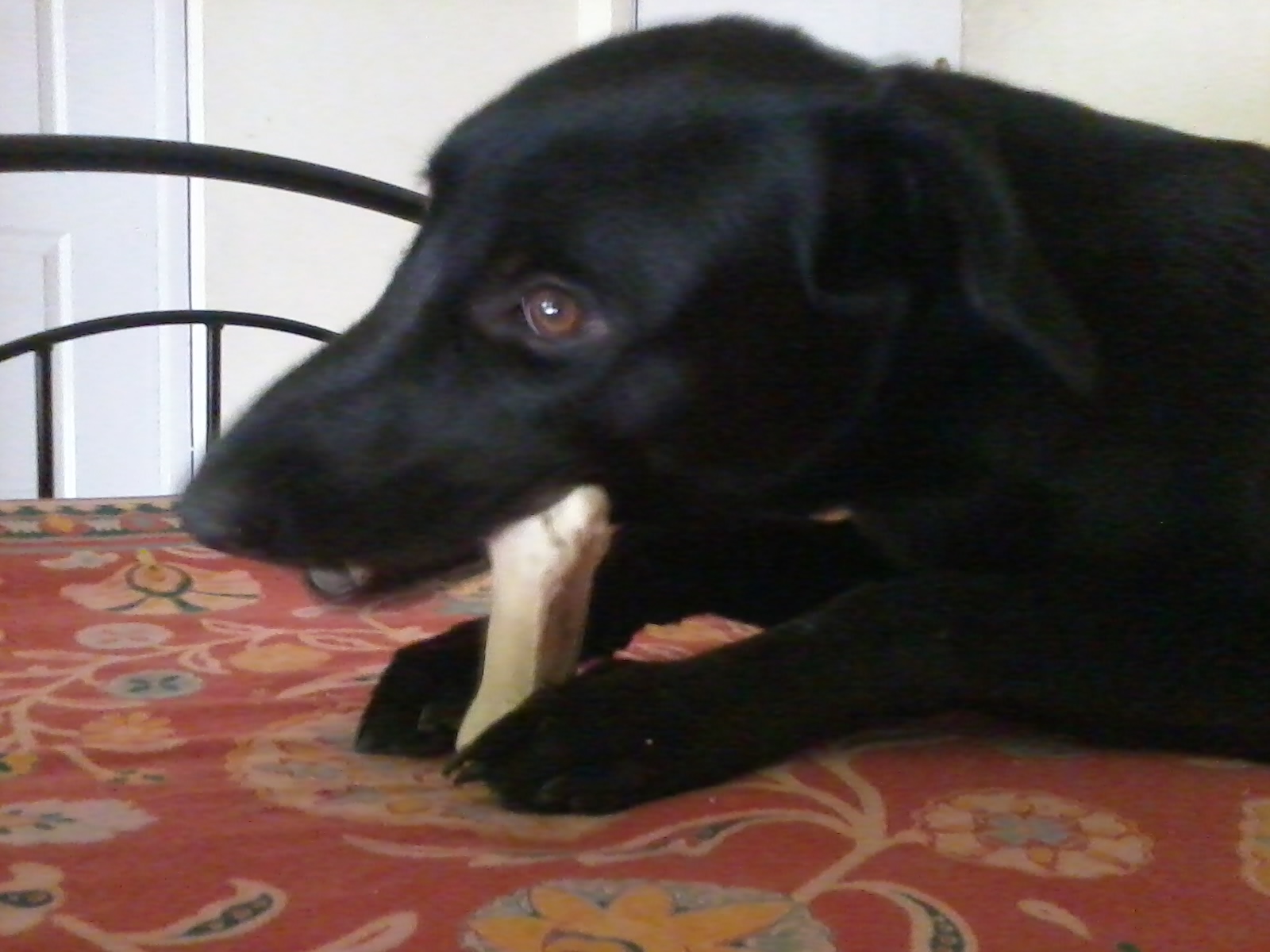
To cut through all the blah, I got home to find the dogess looking wan and pale – a feat considering she’s deep black, but she pulls it off – and depressive. Hrmph, transference, I maintain until I discover the stained doggie bed. Ah, it’s true, dogs have menstrual mood swings too. Kuro and I look set to share a periodically-unhappy-happy future where we reel off lines from Plath and Rich together, before the Brufen kicks in. Ok, maybe not Kuro. She’s too young to abuse painkillers. Anyway, I now embark on morning walks with a stick to beat the shit out of males – the canine variety, though sticks strictly don’t differentiate between species -- who will, every doggy site assures me, inevitably step out of line. The mystery of why Simba-from-the-twentieth-floor was attempting to leap into our balcony, on the floor below, finally sorted. I’ve also spent many hours reading everything I can about dogs in heat.

What’s Kuro’s opinion on her oestrus cycle and the tripping northern grid? When you can’t control things, just savour the most delicious-stinky chewy you can find. Not much different, that, from me devouring walnut cake.

*1980s Mumbai schoolgirl slang for a menstrual period. Not sure of its origins or if it’s still in use.

Saturday, April 7, 2012

Draupadi Speaks


One of the canvases in my 'Women in Indian Myth' series. Acrylic.

Sunday, March 25, 2012

Reel Life


Picked up a wooden industrial reel from a roadside raddiwallah in Gurgaon yesterday and enlisted the kids to paint it in bright acrylics and transform it into a side table.


The chipped portions have been covered with coasters from Gogo Saroj Pal whose paintings of flying women I absolutely love. All in all, a table that makes me want to use it all the time :)

Saturday, February 4, 2012

It's my party; I can cry if I want to!

(This article appeared in an edited form in a local paper called Friday Gurgaon)


January is a month of beginnings and I began mine with the odious task of party hosting. Now, there are lots of folk who enjoy entertaining, who excel at putting together a great menu, who have exquisite chinaware that draws ‘oohs’ of appreciation from the most discerning guest, and whose home is in a permanently immaculate state. I’m not one of those folk.

A month of beginnings


My house always looks like it’s been hit by one of those north Indian summer aandhis with lost socks nestling in corners, month-old newspapers obscuring the side tables, family photographs permanently askew and a sofa set that looked like it had suffered the onslaughts of a teething puppy… even before I had a puppy.

My collection of tableware is, to put it politely, somewhat mismatched: tribal curry bowls made from gourd jostle for space with glazed turquoise china, dented steel plates, and a whole pile of chipped this-and-that.


The powerful maw of the er hound


Then, I’m a slave to the domestic staff. I love eating but I’m a nincompoop in the kitchen, the sort who might absentmindedly put salt in a cup of coffee! This means I’m always sweet to the maid because I live in terror that she might abandon me and move in with the neighbouring memsahib. Chetan Bhagat recently wrote a long and sanctimonious piece about how the help should be treated. I could give him some tips. I treat them better than I treat my awfully wedded spouse (yes, I am being ironic but only about the awfully wedded bit).

Anyway, one day, late last year, the aforementioned spouse swung through the door and announced that he had invited a bunch of people for a new year’s bash. Remembering that the maid had just left for her year-end break, I almost swooned like a lady in a Victorian novel. I could hear the sound of my dreams of a quiet new year’s eve quaffing someone else’s premium alcohol crashing in a valley of despair.

“But, but, but,” I blubbered, “How will I manage?”

“Find a way,” the man of the house muttered “I’ve already sent out texts to everyone”.

Eventually, the big night dawned. In preparation, the progeny, rather unexpectedly, spent the day retrieving socks, rearranging the furniture and even removing smudges of pigeon poop from the balcony plants.


Some order in the dining area after the boys deigned to help

The itinerant cook was, ah, impressed upon to do the kitchen duties while I attempted to be sparkling company. I succeeded mostly thanks to a very polite gentleman called Mr Johnny Walker but hey, that’s not belittling my achievement. My sole brave endeavour in the kitchen was the simple strawberries in cream, which I had developed a taste for in Mahabaleshwar, Maharashtra.

“Very Wimbledon,” someone said appreciatively, proving yet again that if you pass enough alcohol around and provide enough finger foods, everything tastes like ambrosia.

After the last guest had left, the esteemed spouse turned to me. “We did it!” he said while I wondered about the use of that “we”. In the interests of marital harmony, however, I let that pass. Besides, I needed to get a move on -- I was scheduled to spend the first few hours of the brand new year washing a mound of vessels.


Daba-dish! Daba-doom!

Agatha Christie once quipped that she got her best ideas while doing the dishes. I’m not Agatha Christie. The only idea that came to me at the kitchen sink was to pray fervently, to whichever deity deigned to listen, that the maid return and that I not be doomed to labour in the dreaded kitchen, the entirely outsourced heart of my home, throughout the year.

Wednesday, February 1, 2012

The mind of a married man


Bill's thought bubble: "OMG, see what I gotta live with? She just goes on and on!"

Thursday, December 29, 2011

Never the twain shall meet


At the MMRDA grounds, Mumbai, early this week.

Thanks to Anna Hazare, the rivalry between Delhi and Mumbai has just found itself a new front on which to play out: political apathy. The unexpected whimper with which his campaign petered out in Mumbai on Wednesday, 27 December, shocked both Team Anna and media watchers.

Anna’s team had ensured that all arrangements had been made to make supporters in Mumbai comfortable and the state administration too had also provided security but when push came to shove, very few people turned up at the huge MMRDA grounds, which was expected to be at the centre of the action. At the launch of Anna’s fast for a strong Lokpal, reports suggested there were 4,000 and 10,000 people at the venue. The figure dropped to about 300 people on the following day.


August 22, 2011, New Delhi.

Contrast that with scenes from the Ramlila grounds in New Delhi in the latter half of August this year. The grand old man of Ralegan Siddhi drew crowds of 40,000 people every day of his fast. Flag-waving citizens wearing Anna topis, caps printed with ‘I am Anna’, and shouting anti-corruption slogans were a common sight on city streets and there was even some absurd talk that the scent of the Arab Spring had wafted to Indian shores.

But those who know India’s two biggest metropolises aren’t really surprised. I grew up in Urbs Prima in Indis, the city by the sea where dreams go to flower and sometimes die. I now live in Delhi where nothing is as it seems, where the unspoken lingers like a powerful phantom and regulates every social interaction, where every choice you make is a political one, where you are evaluated on the basis of who your parent/spouse is as opposed to Mumbai’s straightforward WYSIWYG* way.

To me, Anna’s movement’s anti-climactic moment in Mumbai once more underlined the inherent difference between the two cities. Though the supportive parallel fast at Ramlila grounds earlier this week was also thinly attended – only 1500 people participated -- mostly due to the biting cold and the absence of Anna himself, New Delhi, the seat of power, has shown that it will always be an extremely political city. Mumbai, on its part, has reaffirmed its status as India’s no-nonsense business capital where work truly is worship.

“One should not just go by the number at the venue. If one had seen the number of people who marched from Juhu beach to MMRDA grounds, he/she will not say that the turnout is low. We have been successful in creating awareness among the people,” Kiran Bedi told reporters in Delhi in a rather sorry attempt to save face. Team Anna had clearly misunderstood the nature of Mumbai and to make matters even more shambolic refused to fully accept the magnitude of their miscalculations.

Of course, plenty of people were pleased.

“So will team#Anna call all Mumbaikars corrupt unpatriotic thieves for their measured reaction to the tamasha is that just for politicians??” tweeted Omar Abdullah, Chief Minister of Jammu & Kashmir.

Media man Nikhal Wagle chose to believe Mumbai’s non-reaction was a result of the country’s unwillingness to accept fascism. “India will always oppose dictatorial n fascist ideas, whether from political class or team anna. Don’t want police raj or kejrival-bedi raj!” he tweeted. A bit surprising considering Wagle was one of Hazare’s cheerleaders on twitter in August.

The events in the Rajya Sabha last night also reaffirmed that parliament proceedings make for the best reality TV. Who needs a Sunny Leone when there’s so much drama and when the supremely articulate lawyer brigade -- Jaitley, Singhvi and Jethmalani etc – are around to make you dizzy with their magnificent sound and fury that eventually signified nothing. Bigg Boss pales in comparison.

Does this mean the anti-corruption campaign has gone straight into cold storage along with the Lokpal Bill? We’ll know soon enough. As far as Mumbai and Delhi go, though, it’s clear that never the twain shall meet.

*What You See Is What You Get


Pics courtesy www.ibnlive.in.com and The Free Press Journal

Saturday, December 17, 2011

50 years of Goa!


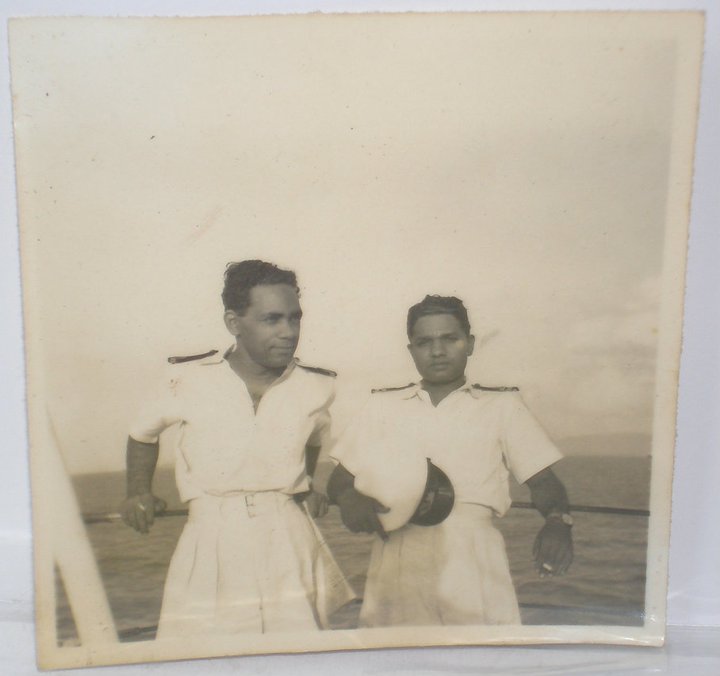
My father (left) taking a smoke break with a friend on the deck of the INS Delhi in 1961. The INS Delhi was one of the ships that liberated the Portuguese territories of Goa, Daman and Diu in December 1961. 50 years of Goa! Wish my dad, Cdr C Narayanan (VSM) (1931-1988) was here to see it :-)

Friday, December 2, 2011

In quadruped heaven

The Asswin Project in Gurgaon, run by sexagenarians Bob and Jean Harrison, treats injured donkeys and shelters the ones that have been abused and abandoned

(An edited version of this story appeared, this week, in a local paper called Friday Gurgaon)


Happy meals at the shelter

You follow Bob and Jean Harrison’s Maruti van and animal ambulance as it makes its daily trip to the Asswin donkey shelter at Kerki Majra on the rural outskirts of Gurgaon. Along the way, the British couple, who are in their late sixties and have lived in India since 1994, stop to load the vehicle with sacks of animal feed, shredded jowar and vegetables. Things look like they’re going smoothly and you expect to reach the shelter in good time when the van breaks down under the weight of its load.
“Oh, this happens quite often,” says Jean matter-of-factly as Bob unloads the van and prepares to fix the flat tire. When you eventually get to the shelter, comprising two well-ventilated structures with spacious stalls located on 35 acres of grassland, you are greeted by two workers Sonu and Raju and the small resident pack of rescued dogs who respond enthusiastically to Enid Blytonesque names like Ginger and Snowy. Next, Sid comes up and nibbles at your trousers. “Oh, our Sid likes the ladies to pay attention,” says Bob. Sid is a lovely little blue-grey donkey with such an adorable face that you just have to pat his head and murmur endearments in his long ears.


Bob and Jean preparing veggie treats

Everywhere on the plot, given to the project by the Gurgaon municipal corporation, the shelter’s 61 donkeys and mules and four horses nibble at the grass, flick their tails at the flies and bray happily to each other. Really, the shelter of the Asswin Project for Donkeys and other Animals in India is the closest thing to quadruped heaven in a country where animals are usually worked to death and treated merely as a means to a lucrative end.
Donkeys have always been used as beasts of burden in India but earlier generations perhaps had a more humane approach to the animals in their care. “Rudyard Kipling’s father, John Lockwood Kipling, wrote Beast and Man in India: A Popular Sketch of Indian Animals in Their Relations with the People about the country’s working animals where he mentioned that donkeys were used by washer men and potters to transport loads,” says Bob as he shakes the bran and jowar into feeding troughs, occasionally throwing in a juicy radish as a treat. Life as a dhobi’s donkey was probably idyllic in comparison to the horrors of Gurgaon’s building sites where donkeys are widely employed. Indeed, the whole of sparkling Gurgaon with its fancy malls and blazing towers that house the offices of every major corporation was built off the backs of these humble animals. Donkeys labour at the sites, at the brick kilns and in the stone quarries of nearby Chhattarpur carrying loads far in excess of the 35kgs mandated under the Prevention of Cruelty to Animals Act of 1960. In a country where human life itself is so devalued, it isn’t surprising to learn that donkeys are beaten mercilessly, made to work endless hours with suppurating sores on their bodies and broken legs and that the labour often results in them dying of a broken back.


"Wait, baby," Sonu implores an impatient donkey!

Almost all the rescued donkeys at the shelter hobble. One, regally named Edwina, was abandoned after her hoof was torn off, others bear scars, a few have ripped ears and a white mare called Lily, who was once the star at numerous weddings, has a hip that juts out from being made to dance on her hind legs. “You just have to place a finger on the backs of some donkeys for them to collapse. The nerves have been so worn down by overloading,” says Bob, a former employee of the British High Commission, who officially set up the Asswin Project – named after the twin gods of medicine in Indian mythology – in July 2006. The project, which currently runs on about Rs 70,000 a month, is financed almost entirely from Bob’s pension and a few donations mostly from the UK. Indian donors are few and far between.


Edwina, her best friend Lily, the white wedding mare, and her foal Fleur

Perhaps it’s because donkeys are inextricably connected with labour and with rituals of humiliation – until recently offenders were garlanded with chappals and paraded on donkeys – that most Indians consider the donkey ridiculous and entirely overlook its loyal and hardworking nature. So, while there are many who are eager to protect cows, traditionally considered holy, there are few protectors of donkeys.
Whatever the roots of the Indian distaste for donkeys, it is a shame that we ill-treat this animal which continues to play such a crucial though unrecognised role in India’s growth.
If Bob has any fears it is that there will be no one to carry on the Asswin Project’s good work after they are gone. “We hope we can find someone who can take over so we can retire again,” he says as you leave.
For the sake of the hardworking donkeys of Gurgaon, you hope someone as capable, upright, and committed as the Harrisons turns up soon.

Number: 9810164214
theasswinproject.blogspot.com

Monday, November 21, 2011

The elevator diaries

How I learnt to make peace with the building lift


Shafted!


There’s something about lifts. Stepping into them is like giving yourself over to a malign god who takes pleasure in torturing you in unexpected ways. This is especially true when you live in a high rise building, a ‘skyscraper’ in Gurgaon. I live on the 19th floor of a fine tower. I love the view, I like that I can sit in my balcony and look down on the world, feel far removed from the tiny people walking on the road and can successfully pretend that I’m above it all, above the troubles, the complexes, the yearning and endless striving of the folk living closer to the ground. It’s a nice illusion.

Those people whose curry recipes I can replicate through faithful observation, whose washing I've watched flapping on rooftop lines, whose marriages I can observe unhindered through my sons' toy binoculars (I swear I've never peered!) actually have such blissful lives. They know nothing about the many terrors of taking the lift multiple times a day. Indeed, it sometimes feels like I spend a large chunk of my life travelling up and down in an enclosed metal coffin. I have nothing against metal coffins. They are spacious and clean enough and effectively move one from point A to point B. If I had been a more cheerful person, all sorts of nudge-nudge wink-wink sexual lift metaphors would have made me laugh. Instead, I'm the joyless type who thinks Sartre is great fun. So the building lift reminds me of death ceaselessly sliding up and down a string in a deep shaft. Seriously, this is the horrible claustrophobia-inducing image that leaps to my fevered neurotic mind every time the lights go off – and they go off many, many times in beautiful Gudgava -- and the lift noisily groans to a halt between floors.

The first time that happened, I immediately lost all my memsahib savoir faire and was reduced to a wailing nutcase comforted by an army of domestic help who tried every language to get me to shut up. Since all those languages sounded like a variation of Bengali, which I don’t speak, I continued to blubber uncontrollably. At first, I tried to cheer myself up by thinking of such fantastic mood boosters as Kamalahasan and Rati Agnihotri grooving in a stuck lift and romantically throwing Hindi film names at each other.
"Besharam!"
"Satyam, Shivam, Sundaram!"

But soon I grew convinced that I had approached the end of my life. What a terrible fate… especially when a whole unopened box of kaju katli was waiting for me in the fridge at home. Now, I’d never get a taste. I was about to hurl myself at the door, attempt to break through those reinforced metal sheets, which really seemed like the last chance in my state of delirium, when the lift started working.

Since then, I have become a veteran of the Stuck-In-The-Lift syndrome. The curious thing about SITL is that, like the Stockholm syndrome, it makes the victim sympathise with the captor. It’s all about perspective, see? When you have no choice you view your fearsome aggressor as a benign much-misunderstood person worthy of respect, even love. I have also introduced a certain yogic all-Indian mumbo-jumbo aspect to my relationship with the lift.

Now, when I step into the metal coffin, I give out good vibes; I exude love and positivity like some deranged baba. And voila, it’s worked! The lift now gets stuck between floors ONLY once a week. I can live with that.

These days, I don’t even look around fearfully at the others in that familiar death trap; I no longer jab the intercom and scream frantically at whoever dares to pick it up at the other end. Instead, I immediately sit down cross-legged on the floor, take a deep breath and chant silently to myself. This has had the not-unexpected result of making the other residents jittery whenever they are around me and the battalion of domestic helpers, that considered me a brainless bimbo after the first lift episode, now fairly bows when I pass.

To add a whiff of dangerous tantric madness to the whole mix, I sometimes also step out of home with uncombed hair and a fantastically wild look in my eye.

It works with the lift; it works with the super-competitive neighbours; it works with the suddenly obsequious domestic help. A memsahib cannot ask for more.


Note: The accompanying picture isn't mine. I'm too nervous to peer down the lift shaft AND click.

Wednesday, November 16, 2011

High rise culture

The ultimate rulebook if you live in a Gurgaon tower


Welcome to the jungle...


Apparently, there’s something sacred called ‘high rise culture’. The term frequently makes an appearance on the notice boards of the gated apartment complex I call home, usually in the admonishing notes of the harried building manager. The poor man seems perennially aghast that residents should indulge in such unnatural activities as unknowingly pushing plant pots off balcony parapets and doing elaborate Suryanamaskars that involve throwing mugfuls of water onto the heads of unsuspecting early morning walkers below. Having often been terrorised by ardent Surya devotees, that note had me nodding in righteous indignation.

Well, the ultimate rulebook hasn’t yet been written but I assume the list of things that are also against ‘high rise culture’ include:

1. Accidentally bumping into someone’s parked car and then driving off without even waving at the close circuit cameras.

2. Using a piece of gym equipment for 21 minutes when the notice says you can use it for just 20.

3. Relieving yourself in the shower before you get into the pool; relieving yourself in the pool before you get in the shower.

4. Yelling obscenities during RWA meetings.

5. Running up a huge bill at the building grocer’s and leaving for a long assignment abroad without paying it.

6. Looking through your neighbour though both of you sit sipping your morning chai and gazing out at the world below in adjacent balconies at exactly the same time every morning.

7. Refusing to get out of the lift even though it began singing that protesting I’m-overloaded-tune when you stepped in.

8. Refusing to coo at sundry babies and pet dogs.
This last one particularly is a serious breach of ‘high rise culture’. Think about it: openly expressing your dislike for powdered babies or fluffy animals will mark you out as… as Hannibal Lecter’s sibling! It’s not a secret you want everyone to know. Really.

I have to be honest. I haven’t always been a properly, uh, high-rise-cultured person: I’m grumpy in the mornings and the thought of even acknowledging that familiar stranger in the next flat is sometimes too much to bear, and heck, I can’t help it if the lift likes me so much it has to sing a tune the moment I step into it. The only way to deal with that is to wedge myself in and accidentally-on-purpose displace some excessively polite or verbally challenged (same thing) other person. However, I can honestly say that I have never ever peed in the building pool or used gym equipment for more than 20 minutes. Indeed, it’s a miracle if I can bring myself to use either of those remarkable facilities at all.

Of course, there are paranoid days when I wonder if some grandmaster of high rise culture is keeping tabs on me. Like, did I commit some serious breach when I got loudly hysterical after the lights went off and I had to spend half an hour in a dark lift stuck between the 18th and 19th floors? Is it alright to always overtake the dawdling morning walkers more keen on gossip than exercise and was it okay to yell at the prayerful 10th floor Suryanamaskari who overturned a lota of water onto my unsuspecting head?

Yup, the rules of ‘high rise culture’ are tricky. One day, perhaps, I’ll induce the building manager to draw up a hardbound volume that lays them all out.
Without too much luck, it could be a bestseller in Gurgaon.


Note: This piece appeared in an edited form in a local paper called Friday Gurgaon //www.fridaygurgaon.com/news/332-high-rise-rules.html">

The picture is not the work of Manjula Narayan; it was sourced off the net. And, oh, in case you're a stalker, that's not where I actually live.

Monday, November 7, 2011

The Exhibitionist

Is everything I do now driven by an exhibitionist impulse? Have I become the woman who lives to tweet, whose life is measured in Facebook status messages?


The mask of the emoticon :p


The delivery boy from the Burmese takeaway stood at the door while the husband scrabbled about the drawers for change. I turned my many bags inside out too – the jhola from Manipur, the upcycled rubber tyre bag from Green the Gap, the chindi tukda sling bag from Khadi Bhandar, the camel hide satchel from Pushkar, the Adidas backpack… yes, I am obsessed with bags but that’s not what this post is about - and discovered a few weathered Rs 10 notes. Eventually, we managed to find enough money to keep the khauswe. And all the while I was thinking about how I was going to tweet about the experience, how I’d frame a 140-word haiku about the incredulous look on the delivery boy’s face as I looked under the flower pots for stray coins and the man of the house stole all the five rupee notes from the younger son’s piggy bank.

It strikes me that I’ve become a social networking whore, someone who lives to tweet, whose life is measured in facebook status messages, who clicks pictures only to share them with the all-consuming amorphous beast-with-the-many-brains out there. Could it be that everything I do now, every action is driven by this exhibitionist impulse, by the need to appear cool, intellectual, smart, sensitive, sexy to that shapeless, infinitely seductive phantom?

Increasingly, I also find it difficult to compartmentalise my online life and the one off it. Sometimes the two merge in such imperceptible ways I can’t later recall if I’ve developed an aversion to Person X because of something he muttered in my ear or because of the smart-alecky comment he made in an FB thread.

Then, there’s the burden of confronting daily the ridiculous ghosts of my past – the girl who sat next to me in class five, my first boss, my first unfortunate boyfriend, the funny colleague from my fifth job, long lost cousins and aunts. Before I plunged so energetically into social networking, all of them had become mere caricatures recalled by their eccentricities, worthies in flaking black and white pictures with ornate borders who were destined to people the grand ‘fictional’ narrative I would one day write. Now that they’ve all been re-infused with life, I’ll have to torture myself and think up new characters.

As my virtual life flowered, I set down some rules for myself: don’t friend current bosses, people you’ve never met in the real world, people you disliked as a child (only the last rule is still in place). Rather stupidly, I didn’t include ‘Don’t talk too much'. As a consequence, I now meet people ITRW (In The Real World, ya noob!) who react to me as I appear to them online. This is a bit unsettling because my online persona is a glib self-possessed bitch. She likes premium Scotch, she uses ‘fuck’ only when she wants to be particularly insulting, she talks a lot about her kids and gets her kicks out of being acerbic about whatever appears in the Indian print media. In person, I am not a confrontationist, like almost everyone else I use 'fuck' liberally in some company and not at all in others, and can only have a conversation that lasts longer than five minutes if the talk is about work.

So what AM I? the real I, not just the glib bitch persona or not just this mass of flesh with blood coursing through veins, electrical impulses crackling through brain, marrow in bone. The self beyond the one who’s someone’s daughter, wife, mother, social networking demon. Could all the 24,391 tweets I’ve thrown into the void in the last two years give someone an accurate picture of the me-ness of me? Do even I know what constitutes that wondrous me-ness of me? The more I think about it, the more I find myself sinking into mental contortions, my idea of myself fragmenting into a thousand little picture pixels.

On insomniac nights this insecurity about my ‘me-ness’ makes me wonder if any of the 1990 people who follow me would really care if I leapt into the Ganga without a life jacket and was washed away. Then I think about my ‘real’ friends -- the ones with whom I experienced that magical falling-into-friendship feeling in early youth, the ones I haven’t met offline for years, but with whom I now regularly ‘talk’. This continuing conversation makes us feel like we’re in touch, though each is conscious of the absence of the warmth of meeting face-to-face. Does this add to the friendship or detract from it I wonder as I move on to my next fear: Will I wake up one day and in a fit of temper brought on by an old friend’s comment on, say, an inane picture of the latest flop cake I baked, suddenly cut her off my friend list, block her on twitter and stupidly eject her from my life with the click of a key?

I am aware that these are the sorts of faltu questions that only neurotics ask. I ask them all the time as I ponder about the extent to which my online self seeps into my ‘real’ self. Are they the same thing? Will I ever understand how different or not they are? And will my life be much better if I just shut up, stopped talking so much in etherspace and forcing everyone to know where I stand on Sonia Gandhi, Lady Gaga, Narendra Modi?

Ah, I have become a social networking whore, someone who lives to tweet, whose life is measured out in facebook status messages and whose adventures are driven by an intrinsically unattractive need to look hip online.

The realisation briefly fills me with self-loathing. Then I quickly frame a status message about it that’s guaranteed to get plenty of likes. People have an insatiable appetite for self-revelatory stuff. Like this.


Picture credit: Mask that's part of the collection of the Museum of Folk and Tribal Art in Gurgaon. By Manjula Narayan

Thursday, October 13, 2011

Two steps forward, one step back

Making a Difference: Memoirs from the Women’s Movement in India that was launched on October 13 is essential reading for anyone interested in Indian feminism. Writer, activist and publisher Ritu Menon talks about the volume of essays


(A version of this article appeared in Time Out Delhi
http://www.timeoutdelhi.net/books/book_feature_details.asp?code=153 )


It was your first job interview. Things seemed to be going well and the portly man in the dark suit who was conducting it was sweet and avuncular.
“But why should we take you on?” he asked suddenly, “You are going to get married anyway”. After a brief silence you mumbled something about being “just 20… not planning on marrying just yet.” Perhaps you were very convincing because you got the job.

In the decades since that irritating experience you have come across a fair number of sexists at the workplace – men who think it’s okay to make suggestive comments under their breath and men who try to have a serious discussion with your breasts. You don’t know if it’s the result of growing older and therefore more inclined to snarl than giggle nervously every time the office jerk makes an inappropriate joke, but you did notice that sometime during the early noughties, Indian men started behaving better at work. Perhaps it was the natural reaction to the influx of many more qualified women, women who were as articulate, aggressive and driven as they were. It was also the result of the growing visibility of the Indian women’s movement.

“The difference between when discrimination is socially acceptable and when it’s not is very major,” says feminist writer and activist Ritu Menon. “Today, there is no single political party that doesn’t have the women’s issue on its agenda. And as you say, no one can pass derogatory comments at work. These are huge changes,” she says.
Menon herself has experienced overt sexism of the sort that you have happily never had to confront. When she gave up her green card and her job in publishing in New York in 1970 and returned to India “infected by the idealism of the 1960s”, she had expected her life to become more meaningful. Instead, six months later she was bitterly regretting the decision. Madras, where her husband got a job with a firm of architects, was a conservative town and Menon, despite her excellent credentials, was unemployed. The oldest and most venerable paper in the city (no prizes for guessing which one) told her it had an unwritten policy not to employ women.

Menon went on to cofound India’s first feminist press, Kali For Women, but that memory rankles enough for her to mention it in her essay in Making a Difference: Memoirs from the Women’s Movement in India.

Brought out by Menon’s publishing house, Women Unlimited, the anthology includes essays by Indira Jaising, Vandana Shiva, Ruth Vanita, Ilina Sen and Menon herself, among others.

Quite naturally, the classic feminist idea of an individual’s experiences being shaped by political forces was the book’s guiding principle. “The big question in my mind was, ‘How do you write the biography of a movement?’ Because this business of the personal being the political is a major feminist contribution to analysis, I thought of doing a book of personal-political memoirs,” she says.

As it happened, 2009, when the idea began to germinate, was the 25th anniversary of Kali for Women, the publishing house Menon founded with Urvashi Butalia and with which Women Unlimited is still associated. “So the idea of asking women who had been active for a quarter of a century to do a “looking back-looking forward but through a memoir seemed like a good one,” she says.

The brief was to write about how many women’s lives had been transformed by their involvement in feminism and in the women’s movement. Since she wasn’t looking to create a hagiography of the movement, Menon actively encouraged the essayists to examine their doubts.

“Doubt is a very important part of any struggle, when you question something, not just the ideology but your own role in it, your own response to it. So there were contradictions, personal as well as ideological; there were differences; there were fallings out. I thought all that should form a part of this record,” she says adding that these sorts of personalised accounts are often completely erased.

“This is true not just of women in movements. No social movement -- the environment movement, the fish-workers’ movement, the right-to-housing-and-shelter -- has had, in my view, a satisfactory recounting,” says Menon who wanted the book to catch moments of transformation.

“Anyone who has taken part in a movement knows how significant that is. From the accounts you will see that everyone has made that leap into consciousness,” she says easily admitting that many contributors had to be coaxed.

“Some were hesitant: some didn’t have the confidence; others just didn’t have the time,” she says. “And to write a memoir which is personal… not everybody wants it all in print. Really, it’s not an easy thing,” she says.

Some of the writing is more personal than others. So while Ruth Vanita writes about the slow process of coming to terms with her sexuality, Gabriele Dietrich gives the reader snapshots of the different streams within the movement.

“Some essays have a subtext. They are ‘a curtained autobiography’ where you have to read between the lines. And some people are extremely forthright,” she says revealing that she left each writer to find her own thread. “It’s not for me to tell them how to write. Each one has written the way she wanted to present one facet, one partial part of the story, because it’s never the whole story, nor can it be,” she says referring to the near impossibility of condensing years of activism, thinking and reflection into a single essay.

Things have come a long way since she was refused that newspaper job but Menon believes the Indian woman is now caught in a “two steps forward, one step back” conundrum. Yet she remains optimistic about the future. “One has to be optimistic, otherwise you just give up,” she said, firmly. “You can’t do that!”


In Conversation

Menon spoke about the shifting power dynamic within sexual relationships, the difference between feminism and the women’s movement, women’s participation in communal movements and how difficult it is for a man to stay married to a feminist when you met her at her tastefully spare office in Delhi’s Hauz Khas Enclave.

In your essay, you say it’s difficult for men to stay married to a feminist. That was something that stood out for me.

It is very difficult to give up privilege. For men and women both. In a relationship like a marriage, which is extremely intimate and is a long term commitment, to believe and to have the conviction of equality and respect is not easy. It’s much easier for women because they have something to gain. It’s much more difficult for men because they have something to lose. And what are they losing? Privilege. To reconcile to that requires a great commitment. And to maintain that commitment in order to make that relationship sustainable is a very remarkable thing. That’s what I meant when I said that for men to be feminist in conviction is a very remarkable thing. It’s not that common but it’s not that uncommon either. One has seen, over time, that many of the men who have whole heartedly committed to it are also the ones who have some social commitment. There is a sensibility there which respects equality; it is something that they believe in as a value. It’s not easy; not everyone does it. I’ve always wanted to do a book of interviews of men who have lived with feminists. But there are very few men who are willing to be interviewed! It is very difficult to lay bare a personal life. And to speak about something that is so, so very personal, you have to have tremendous maturity and confidence. But it’s something that I think would be very worthwhile. So that’s a project. It will happen one of these days but it will take a little time.

What do you think about the great involvement of women in communalism? We’ve seen women being active in riots.

That whole idea of sisterhood being global, which was the slogan of the 1970s, which was part of the international women’s movement… that came up for questioning early on. The first people to question it were the black women in the US. They said this is not something which can be adopted wholesale; it has to be unpacked. And then, of course, once we started dealing with issues of caste, class, community, it became very evident that not all sisters are united across the board. With rising communalism and with the great involvement of women in such movements, it has always been clear that not all women were…
Women as women cannot be assumed to be united. It’s not just your gender that is the prerequisite. Some consciousness has to be there, some ideological persuasion, which is why we say there’s a difference between being feminist and being just part of the women’s movement. Anyone can be part of the women’s movement but being a feminist is a slightly different thing. It assumes a certain political or ideological awareness. And that is actually what lies at the heart of that questioning of that sisterhood being global, all women being united across the board, that there are disunities. Unless we recognise the differences and those distinctions, it won’t be possible to analyse and respond to the issues, whichever issues we’re dealing with. That has become clearer and of course, it hits home much more on certain issues than in others.
So, for example, we may all more or less be united on the issue of violence against women but when it comes to violence against Dalit women or against minorities, or against tribals, then you have to acknowledge that there is a question of dominance among women, between women. It’s that kind of understanding I think that has certainly made the analysis much deeper. And it has been refined I feel. The international women’s movement doesn’t have to address caste but we do. We may not have to address race in the same way as black women do. But many have said that there is a similarity between caste and race, because these are historical discriminations based on descent. They are not exactly the same but the outcome manifests in the same way. That has inflected women’s movements all over.
In Australia, it’s the aborigines. I’m saying is that this understanding has informed the movement as it has gone along. And I see it as a phase. I certainly think that one has to first recognise that there is subordination worldwide. The terms of the subordination, its manifestation, its specific attributes may differ. But the fact that there is subordination, there is patriarchy, that is universal. As one of our authors says, the first globalisation was the globalisation of patriarchy. That’s at the base. Then you build on that. That’s the difference between the feminist and the women’s movement. The feminist does acknowledge patriarchy as a primary contradiction, not class.

But it is.

Yes, but lots of the Marxist feminists don’t fully subscribe to that. They say its class and patriarchy. Of course, surely, but which comes first is the question. That’s been one of the discussions in feminism: Is it class or patriarchy?

Is it impossibly idealistic to believe women can break through the barriers that divide them?

They do on issues. There are a whole lot of issues on which there can be consensus, there can be agreement and there is ample evidence of that across the world. But I don’t think there’s any movement in which there is unity for all time. We don’t even expect it. So there’s no intrinsic reason why the women’s movement should not also have it. It’s a good thing. It’s a very healthy thing to have differences because it is only when those distinctions surface that you have more complexity and a much clearer understanding of what you are up against. No point being lulled into something that doesn’t exist.

Do you think things are getting worse for women? There has been, for instance, a higher reporting of honour killings.

This is one of those yes and no situations. I feel it’s becoming worse now than it was 20 years ago. I’m not sure that there are more honour killings than there used to be. We hear about them more; they are reported more. They were not reported earlier or so one can surmise. There’s no way of knowing for sure but I would say there’s a good chance that those killings we may not have known about. Now we do. On the other hand, look, there are a million women in the panchayats. It’s a huge thing. It’s a giant change. Can you imagine 1 million women?! We cannot even imagine the kind of change that will come about 10 years from now as a result of that. So I’m saying I can’t say it’s got worse; I’m saying there are many things that have got better. Women in the informal sector are now recognised; they are acknowledged; they are counted. They never were before. Violence against women has been acknowledged, legislated against, all of that. These are major changes, but yes, over the last 25 years there has been a greater commodification of women at the same time. I think that whenever there is a shift to the right whether it’s in economics or in politics, it has an impact on women that is detrimental. Many people will say, ‘But women are so much better off’. Yes, of course, there is a whole generation of women that are much better off, sexual mores have changed. But the mean age for marriage for women in India is still 15-and-a-half. What do you say about that? Among a certain section of women, age at marriage is increasing and going up to 27-29, but if we look at it across the country, it’s still two-and-a-half years below the legal limit. So it’s not possible to say categorically that it’s very much better or very much worse. It is really that two-steps-forward-and-one-step-back kind of situation. I think the amount of problems has increased across. Look at the increase of militarisation across the subcontinent. Surely women are going to be affected by it.

How does one react to women in Kashmir, and to those in the areas where the Maoists are influential?

Unfortunately, these things remain impressionistic. It would be a good idea to do some kind of serious inquiry into that. Instead, what we have are snap polls. Although the issues are of great import, somehow the response to them is less serious than it should be.

So you think there’s a dumbing down of the discourse about these things?

Either that or it’s given space in a very superficial way. Maybe it’s better that it’s given some kind of visibility… I don’t know. Sometimes I wonder: that kind of visibility, does it actually make visible or does it conceal more than it reveals? Both things can happen. Unfortunately, the situation is so complicated it’s very difficult to speak about it in general terms.

Is it possible at all to escape the power dynamics in a heterosexual relationship? Actually, in any relationship?

You’d have to ask a lesbian couple that.

I have and have been told power dynamics play out within lesbian relationships too.

Gender relations between the sexes are one thing and human relationships are another. One could say hypothetically, can a relationship between parent and children ever be equal? Of course, there are power dynamics in every relationship. I really think that it is very rare to have a completely equal relationship but it doesn’t mean that whoever has the upper hand or whoever is “powerful” is powerful for all time. It keeps changing. It’s a very fluid, volatile relationship; it’s not fixed in time. Things change, people become dependent; people become vulnerable; people gain confidence. All sorts of things happen in the course of a relationship. What we’re talking about is structural discrimination, those discriminations that have been given sanction, that have been given social acceptance… that it’s okay to beat your wife.

Surveys in India often show women saying they think it’s okay if their husband beat them.

Since the National Family Health Surveys began this has been established. That’s what I mean; those are the structural imbalances, discriminations, power equations that one is talking about. In that sense, I’m not sure there’s been enough work on lesbian relationships to see whether there is a structural foundation or whether it’s individual equations that are worked out. One should do an inquiry on that.

To get back to the book, what was the most difficult thing about it?

It was a wonderful experience. It was just so heartening to read and be able to look back and also to see where we are now. When some of the women weren’t able to write, that was disappointing… But I can’t say it was difficult. It was difficult to edit, to make sure everybody has equal space, that some are not very much more expansive than others because you don’t want that kind of imbalance. Mostly it was very heartening. Writing is a very cathartic thing and I think a lot of the women experienced that. It’s not easy but it’s also cathartic so I was happy about that. It had to be spontaneous; it had to be willingly done. I understood perfectly the ones who said they could not do it for whatever reason but the fact that so many did and the fact that it was cathartic, that’s something to cherish.
There are a lot of women who may not be able to write their stories but whose recollection may be very important. So maybe we’ll do one of interviews next. It’s on the agenda but when it will happen is a question of time and availability and people’s willingness to lend themselves to that.

Personally speaking did you ever face discrimination?

Of course, in so many subtle ways. And you internalise it a great deal. It doesn’t even come out as an experience as such of active discrimination but it’s there all the time. There are two ways of responding: either you allow it to overwhelm you or you can acknowledge it and resist it. Personally, I became aware when I went to get a job at this newspaper in Madras and I was told they didn’t hire women. They said it’s an unwritten thing; they would never have advertised it as such. But it was there. Very often, you are not surprised by it in a sense that it is so much a part of the general lie of the land. Just like when you put down your father’s name. It is a form of discrimination, isn’t it? It doesn’t change your life but it does establish a hierarchy. That’s what gender relations are about. It manifests in many ways; maybe harmless maybe not. There’s no way that you don’t register difference and difference that is to your disadvantage. I have met very few women who’ll say that we’ve never had such an experience. That’s how you experience it. Even if it’s not overt, concrete, that knowledge is there.

Then there’s the knowledge that the ‘honour’ of the family is vested in you.

You don’t go for a walk alone in a park at night no matter how liberated you are. It’s got to do with vulnerability and is entirely a consequence of your gender. Insecurity on the streets has become much worse, by the way. I’ve grown up in Delhi and I have never felt this vulnerable. There was never a time as a young girl when I was not running around, going to friends’ homes and walking back at 10 o’ clock as a teenager. Of course, some people tried to misbehave and they were roundly dealt with but there was none of that threat of violence, which is now a knife, acid… That’s become real now. People coming in a Qualis and picking you up, that was unheard of! There is much greater violence now. I don’t remember being afraid of going out after dark with friends. It was a simple life I have to say. That’s changed.

So, on the one hand, Indian women have greater choices and on the other, there’s increasing selective foeticide and more violence.

One doesn’t cancel out the other. It doesn’t mean that just because you have greater choices, the other doesn’t exist. If you look at the beauty business, for example, there are huge pressures. Sure, you have much greater choices, you can make a lot of money, you can be a public face… And then look at the flipside as well.

The objectification?

Yes, and also the pressures on young women. Though there are greater choices, is there a possibility of exercising that choice? It’s all very well to have lots of options but can you actually exercise your choice? There are lots of pressures as well that come as a consequence. People speak about the double burden: the choice to work is there but you still have to do everything else as well. But these are not either-or situations. These are negotiations and everyone negotiates them differently.
Making a Difference, edited by Ritu Menon, Women Unlimited, Rs.350. The book launches on Thur Oct 13.